The next cohort has the focus of teaching machines to think and interpret as we do. Share a project or research idea that aligns with the topics below.
AI Agents
• Pioneering Long‑Term Memory: Designing agents that retain and evolve knowledge across lifetimes of interaction.
• Self‑Evaluating Intelligence: Building agents that critique, correct, and refine their own reasoning in real time.
• Cognitive Personalization: Crafting adaptive profiles that mirror human individuality and unlock bespoke collaboration.
• Autonomous Research Engines: Deploying agents that independently generate, test, and publish new discoveries.
Software Engineering for AI
• Next‑Gen Conversational Systems: Advancing voice assistants and chatbots into truly immersive, multimodal companions.
• Closed‑Loop Innovation: Embedding feedback cycles that accelerate software evolution without human bottlenecks.
• Intelligent Infrastructure: Pushing the boundaries of vector and cloud databases to power scalable, agentic ecosystems.
Applications of AI
• Transforming Industries: Applying generative AI to redefine finance, healthcare, content creation, and administration.
• Expanding Horizons: Exploring novel domains where AI can catalyze breakthroughs beyond current imagination.
Next cohort · register interest
register interest
Who should register?
This is for curious, early-career researchers and builders — students, junior engineers, data/ML enthusiasts, designers, and creatively technical people.
Introducing Cohort 02 — Teaching Machines to Interpret as We Do with TEV
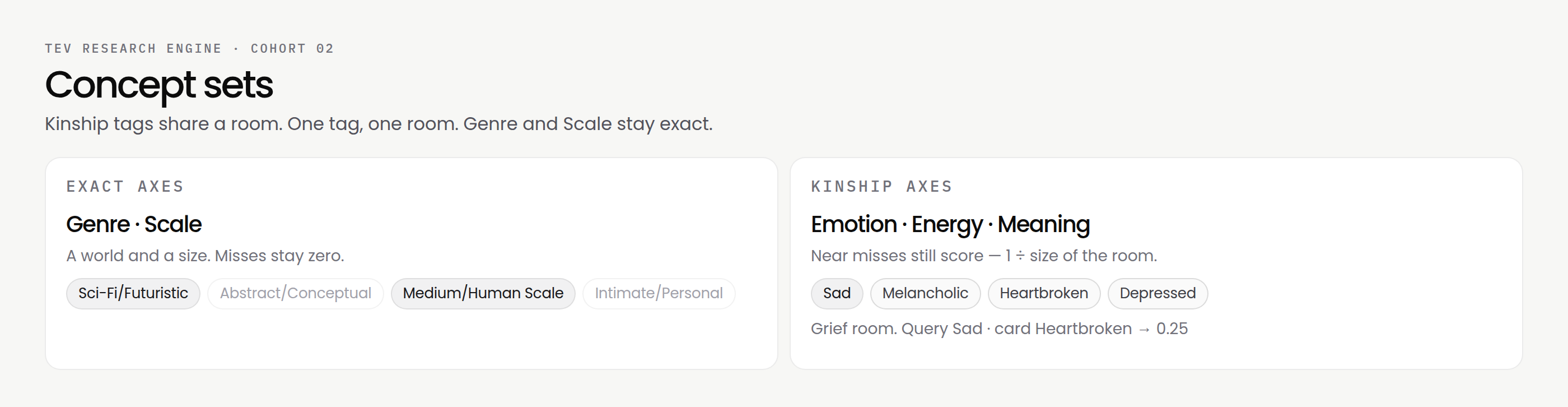
Cohort 02 has started a 12-week programme on teaching machines to interpret as we do. The TEV Research Engine is in beta: retrieve by meaning, not keywords.
Asycd AI Research (March 2026): Demos in Multi-Agent Orchestration and Bayesian Prompt Compression
The Asycd research lab officially launched the week of February 16th, initiating a high-intensity immersion into the current state-of-the-art in Generative AI. Learn about the first two weeks of the lab and how our researchers are doing.
How to Think About Software Architecture Design? - Week 5 Research Lab Update (Mid March 2026)
In this week’s task, we tasked the researchers with creating architecture diagrams to visualize their solutions. An architecture diagram is visual representation of the key components, processes, inputs, and outputs involved in a system, and how they interact end-to-end. From the moment you press ru
The Asycd Research Lab explores cutting-edge AI, automation, and prompt engineering - turning experimental ideas into practical tools, workflows, and potentially commercial products.
TEV2 and Agentic Creativity: Exploring the World Through a Single Frame
TEV2 leverages various different web data sources to generate enriched, multi-perspective AI art, blending agentic creativity with scalable production for unique visual experiences.
Visualizing the Effects of Prompt Reordering and Punctuation in AI Prompts using AI Art
Ever wondered how punctuation and word placement shape AI-generated responses? In this article, we explore the hidden mechanics behind prompt engineering, revealing how subtle tweaks—like commas and phrase order—can dramatically alter AI outputs. Our latest research dives into practical demonstrat
A New Era for AI Costs: The Innovation of Inference-Only Compute Costs
Inference-only compute is revolutionizing AI economics by letting users pay only for the compute used during inference, eliminating costs for idle resources. Platforms like Modal dynamically allocate GPUs for precise, real-time usage, enabling startups to experiment freely, scale efficiently, and
Timestamped Embeddings for Time-Aware Retrieval-Augmented Generation (RAG)
Discover how timestamped embeddings are revolutionizing Retrieval-Augmented Generation (RAG) by enhancing AI systems with temporal awareness. Learn about their crucial applications in finance, technology, and more, and explore Python implementation techniques to boost data relevance and retrieval ac
Enhancing LLM Adaptability Through Dynamic Prompt Engineering
A truly intelligent AI will be able to perform multiple tasks with ease and accuracy. No need for separate writing assistants, customer support etc. We propose an agentic and dynamic system prompt approach that uses a separate LLM to analyse the users queries and transform the insights into a usefu
the filter-bubble problem in recommendation algorithms + the potential impact of generative ai
The filter bubble paradox highlights how AI-driven personalization enhances user experience while limiting exposure to diverse viewpoints, risking creativity and broadening inequality in digital content.
ReAct Prompt Framework: Enhancing AI’s Decision Making with Human-Like Reasoning
Discover the power of ReAct prompting for AI responses. Our article delves into the ReAct framework, enhancing decision-making in language models with human-like reasoning1. Learn how ReAct surpasses Chain-of-Thought, offering structured, precise AI outputs.
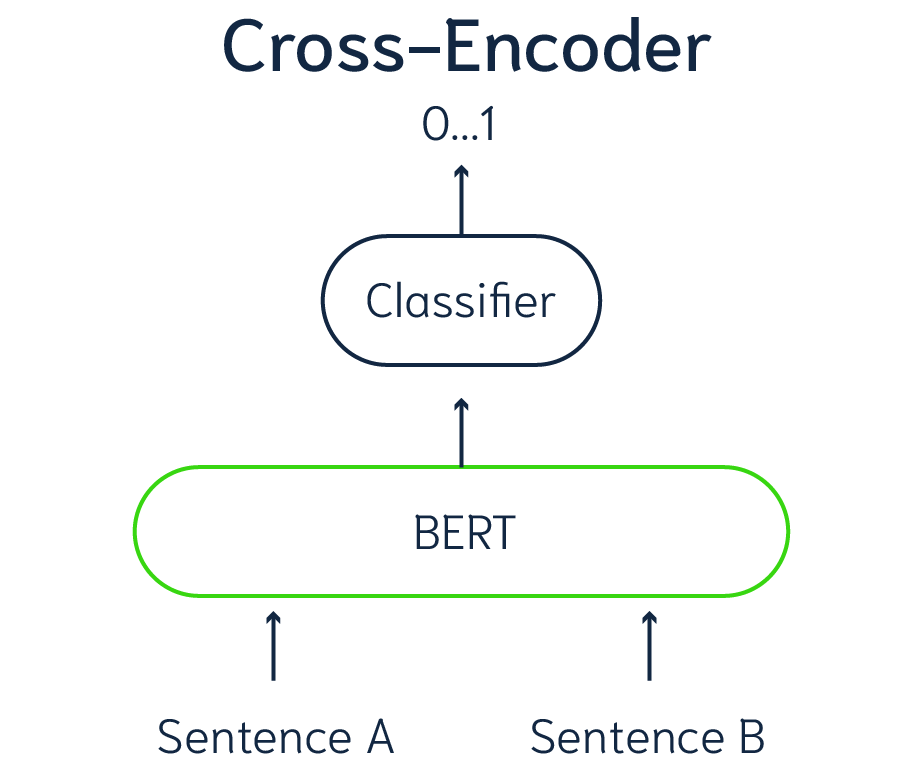
Cross-Encoder Models for Efficient Query-to-Context Mapping
Cross-encoders offer a powerful lens into the semantics of dialogue. By jointly analyzing user queries and conversation history, they surpass basic similarity methods to reason about intent, entailment, and contextual nuance. In our work at Asycd, they serve as the final arbiter for query-to-conte
Three researchers. Three tracks. The inaugural sprint finished in late May 2026. Cohort 02 applications are now closed.
01
Joel-Allen Calliste
Bayesian Prompt Compression via Structural Pattern Discovery
02
Saksham Kapoor
Distributed State Consistency & Cost-Aware Orchestration for Multi-Agent Systems
03
Syed Kumail Haider
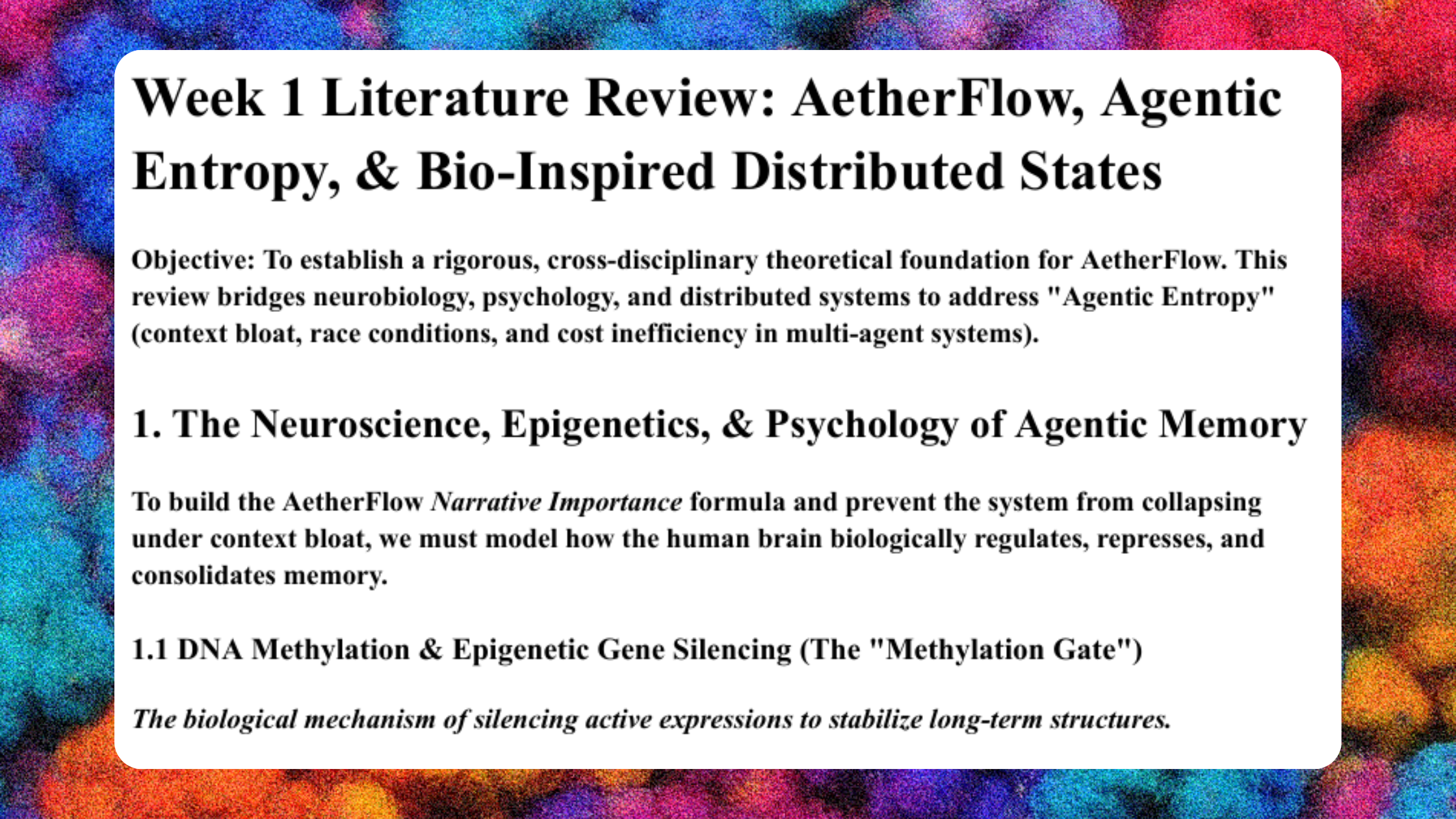
Emergent Memory and Continual Reasoning in Generative AI Agents via Biologically Inspired Learning Dynamics
from the first sprint
Outputs from Cohort 01: demos, packages, and systems that survive contact with real-world prompts.
Joel-Allen Calliste
Bayesian Prompt Compression
Bayesian prompt compression via Structural Pattern Discovery — a Gaussian process that shrinks prompts while holding performance. Installable as prompt-compress; demo site forthcoming.
The Asycd research lab gives early-career generative AI enthusiasts, undergraduates, and indie programmers a chance to contribute to meaningful prompt engineering and applied AI research.
We have researched prompt engineering since 2022 and are scaling those efforts while identifying high-potential people and ideas. The lab runs in 3-month sprint periods with a small cohort each cycle.
Current status: Cohort 01 finished in late May 2026. Cohort 02 applications are now closed — register interest for the next cohort.
Follow outputs on the blog — literature reviews, V0 demos, architecture notes, and shipped packages from the first sprint.